Self-discipline is doing what’s right instead of doing what you feel like doing. That’s the meaning of self-disciple.
USD
EUR/USD
The Euro slid to $1.1735 as hotter US inflation bolstered US Dollar. Annual inflation in the United States jumped to 3.8% in April from 3.3% in March.
GBP/USD
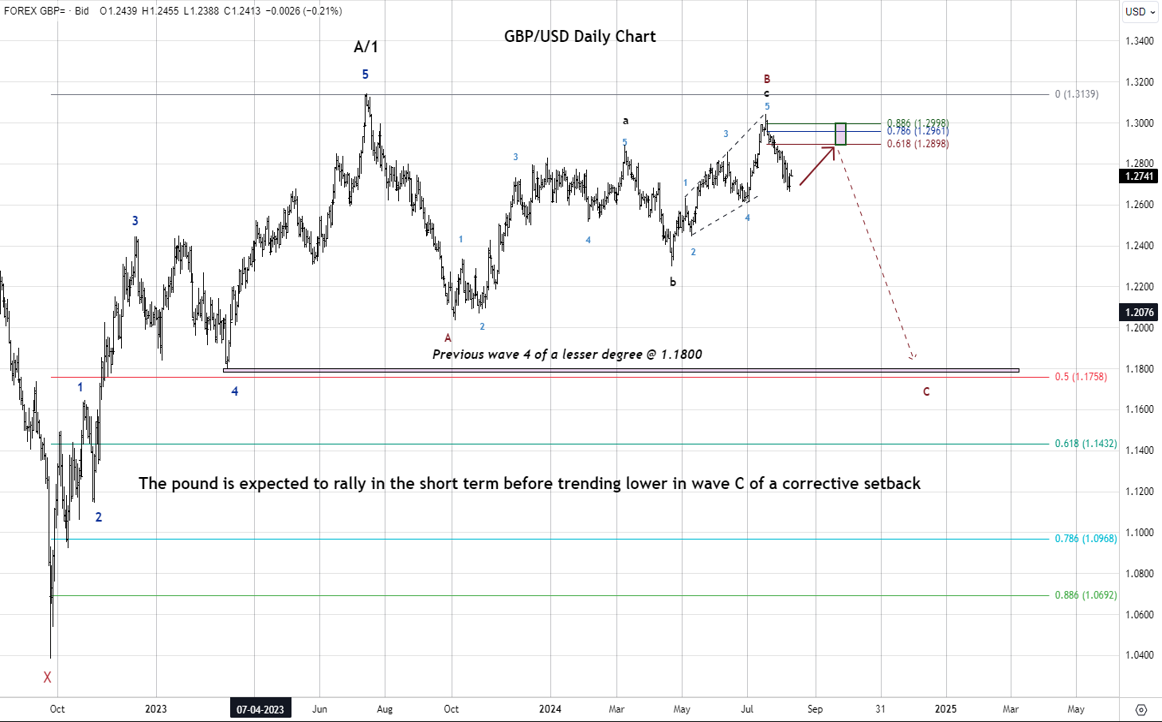
The Pound Sterling came under pressure at $1.3535 as investors reacted to rising UK political uncertainty, with markets worried that instability around Prime Minister Keir Starmer could lead to looser fiscal policy and higher inflation.
USD/JPY
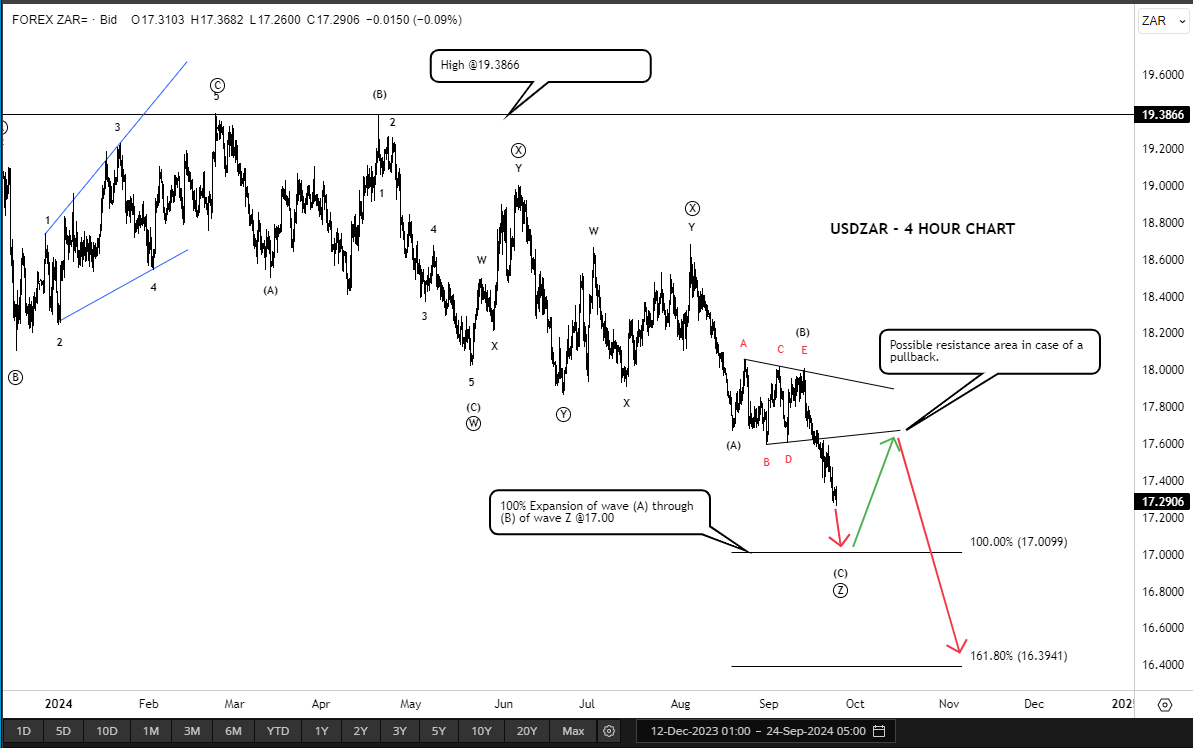
The South African Rand remained within familiar territory at 16.4976 against the US dollar despite data showed an increase in unemployment in Africa’s most industrialized economy during the first quarter of 2026.
USD/MUR
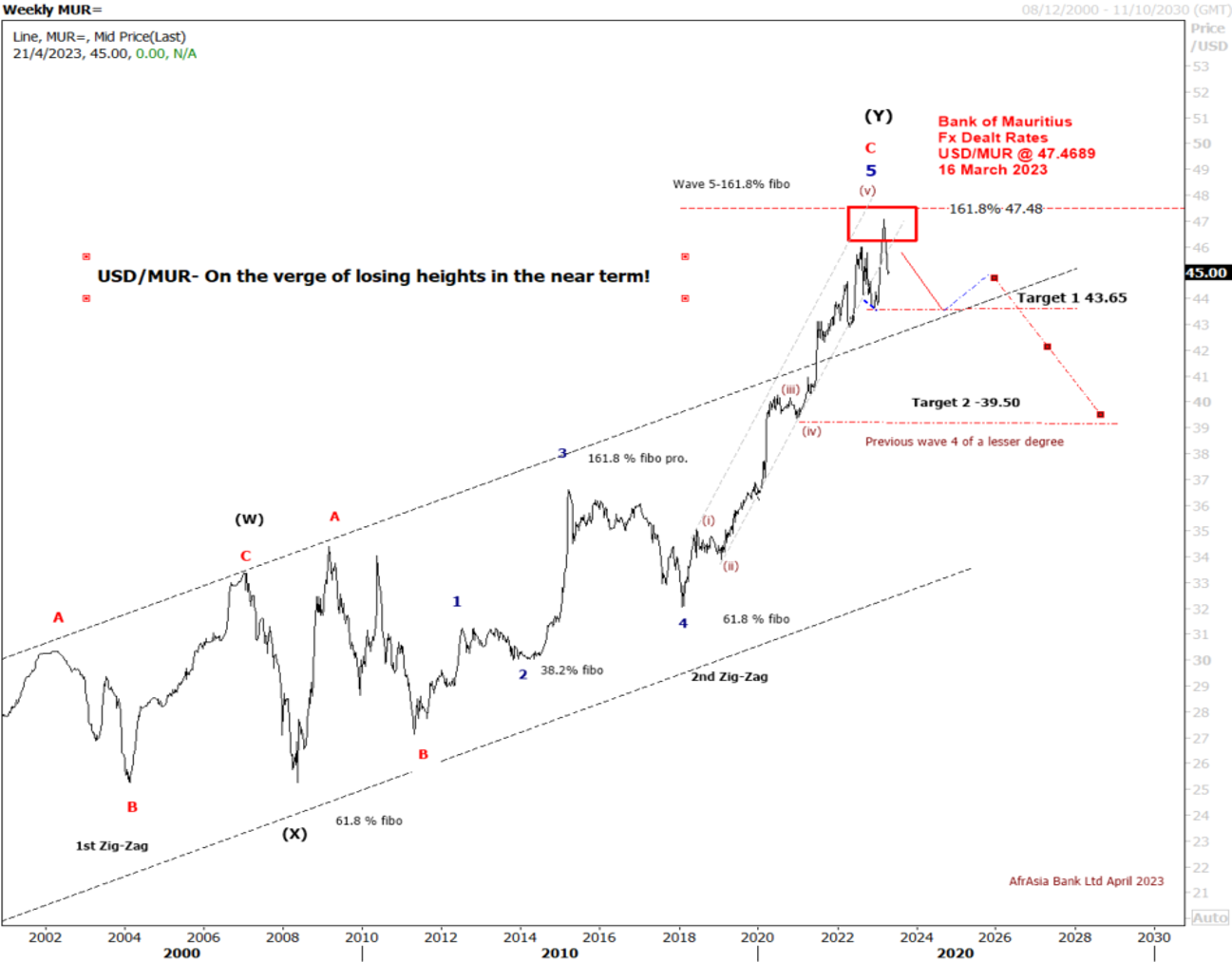
The Dollar–Rupee surged to 47.4908 (selling) this morning.
10:45 AM EUR Consumer Price Index (EU norm) (YoY) (Apr)
1:00 PM EUR Employment Change (QoQ) (Q1) Prel
1:00 PM EUR Gross Domestic Product s.a. (QoQ) (Q1) Prel
1:00 PM EUR Gross Domestic Product s.a. (YoY) (Q1) Prel
1:00 PM EUR Industrial Production s.a. (MoM) (Mar)
4:30 PM USD Producer Price Index (MoM) (Apr)
4:30 PM USD Producer Price Index (YoY) (Apr)
4:30 PM USD Producer Price Index ex Food & Energy (MoM) (Apr)
4:30 PM USD Producer Price Index ex Food & Energy (YoY) (Apr)
7:00 PM GBP BoE's Mann speech
7:30 PM USD Fed's Collins speech
9:15 PM USD Fed's Kashkari speech
11:00 PM EUR ECB's Lane speech
11:15 PM EUR ECB's President Lagarde speech

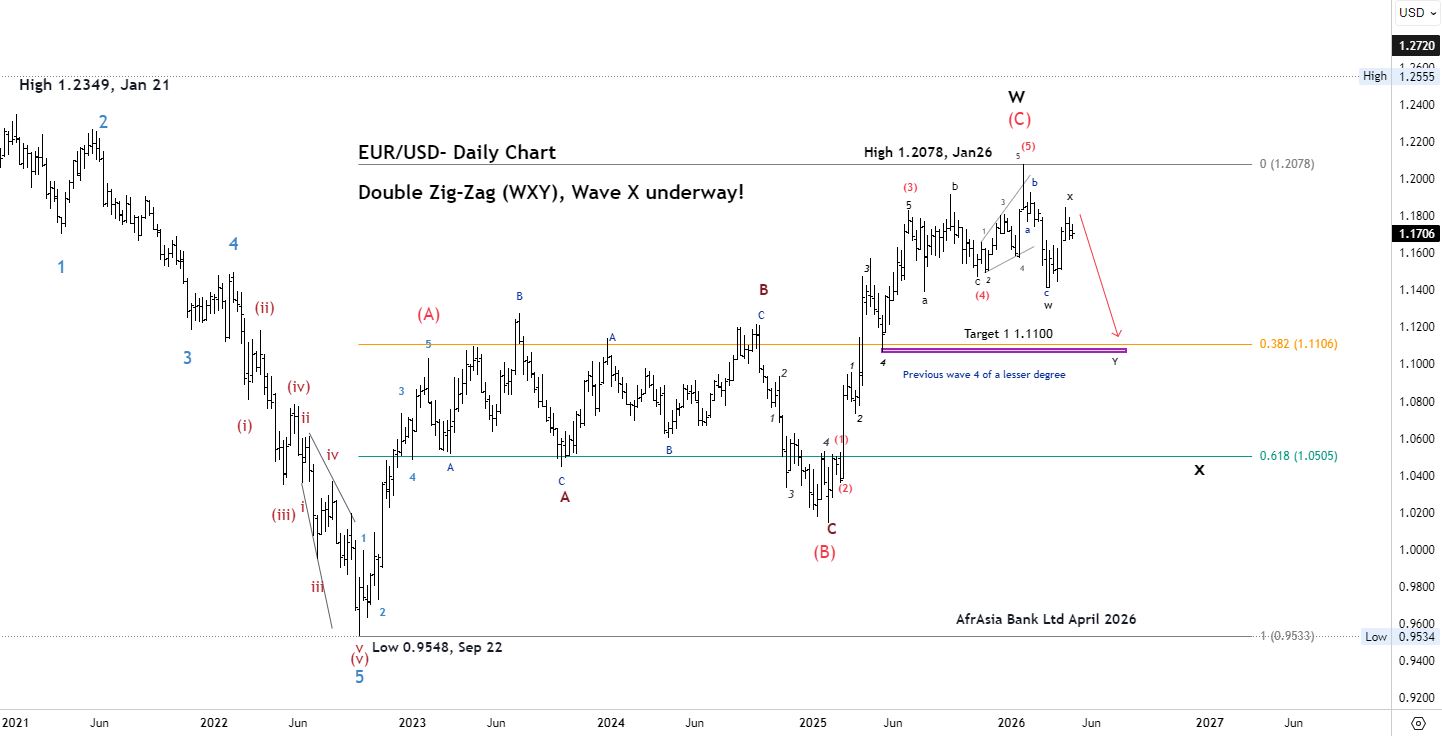
Technical News – EUR/USD
Double Zig-Zag (WXY) Structure; Larger-Degree Wave X Still Unfolding
Following a peak at $1.2078 on 26 January 2026, EUR/USD has retraced part of its 2025 gains, falling to $1.1411 before recovering toward the $1.17 area.
From an Elliott Wave perspective, the pair appears to have completed wave W and is currently unfolding a larger-degree wave X within a broader double zig-zag corrective structure (WXY). While elements of wave X's internal structure appear relatively mature, the overall corrective phase is still in progress.
The recent recovery toward $1.17 is therefore interpreted as part of this ongoing wave X, rather than the start of a new impulsive sequence. As such, once wave X completes, the pair is expected to transition into wave Y, resuming the broader corrective decline.
In this context, a move lower is anticipated over the coming months. In the near term, an initial downside target is seen at $1.1100, which marks a key support zone defined by the Fibonacci retracement (0.382) and the previous fourth wave of a lesser degree. Further downside extension remains possible as wave Y develops.
On the upside, a sustained break above the $1.20–$1.2078 area would invalidate the current WXY corrective scenario.